
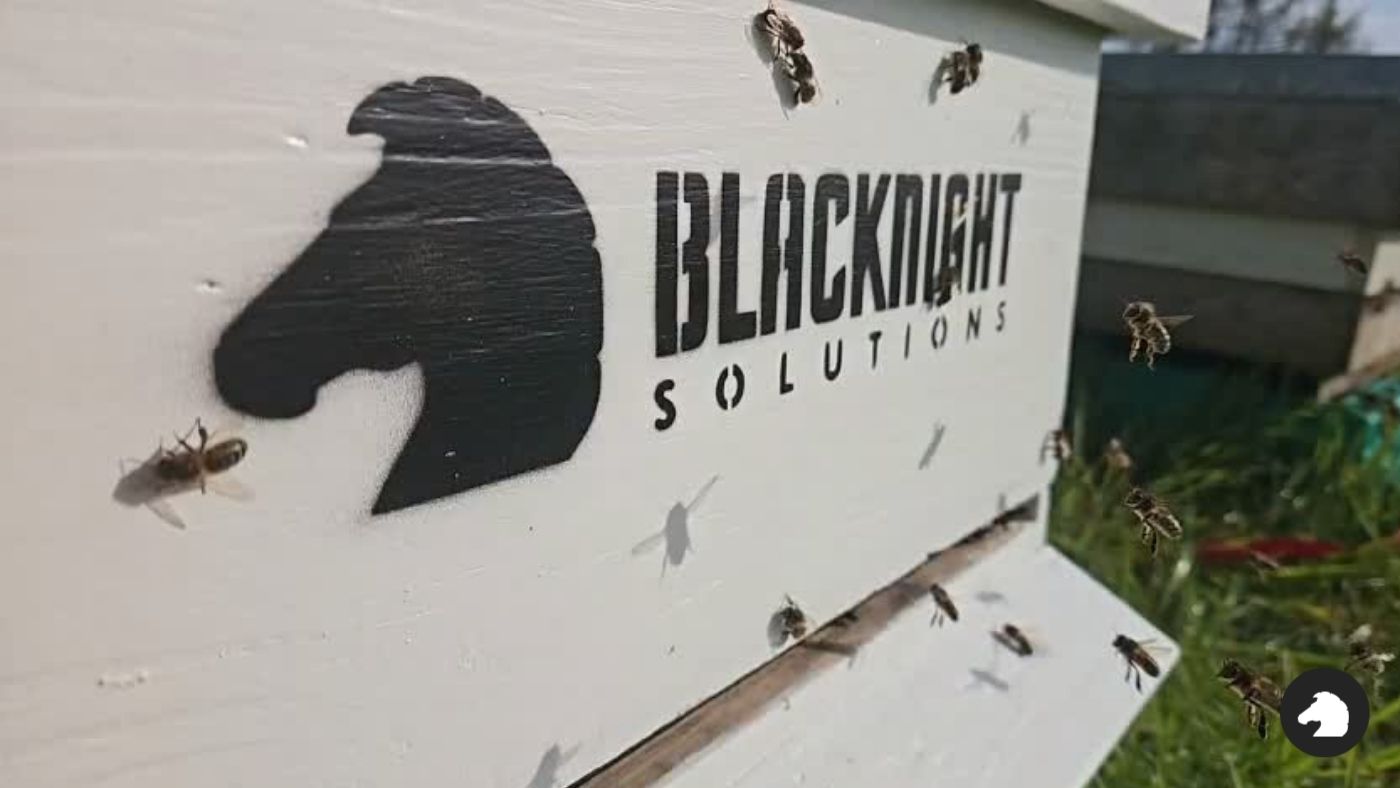
We were absolutely delighted to attend the annual extraction day with the Carlow Beekeepers Association this year — and, for us, it was a very special occasion.
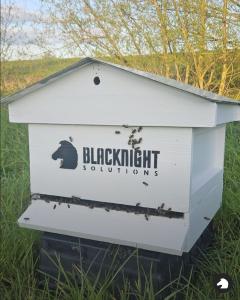
For the first time, we got to see what our very own hive had been producing. What followed was a fascinating day of learning, discovery, good conversations and a whole new appreciation for just how incredible honeybees really are.
We went along thinking we were going to see the area where the hives are and just have a BBQ. We came away having learned about everything from the bees’ winter survival strategy to how they build their honeycomb, what they use propolis for, why the hive is designed the way it is, and even why honey can last for such an incredibly long time.
And, of course, we got to taste the result of all that hard work!
From Wax to Honey
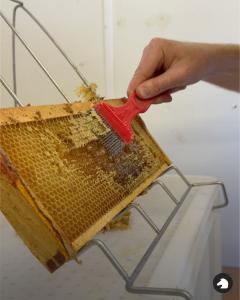
One of the highlights was being able to take part in the extraction process. We started by carefully scraping away the thin layer of wax, known as the cappings, covering the honeycomb. These are the little wax seals the bees place over the cells once the honey is ready to be stored and preserved.
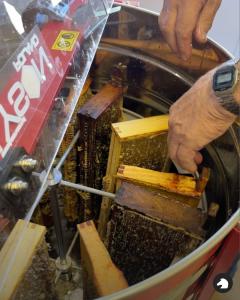
Once the cappings were removed, we could see the beautiful honey sitting underneath. The frames were then placed into the extraction machine, where they were spun to release the honey from the comb.
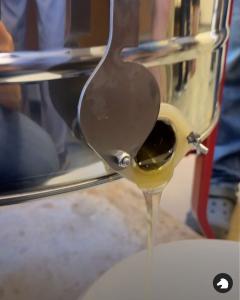
And then came the moment we had been waiting for — opening the tap and watching the honey pour out. It was one of those simple moments that is actually quite extraordinary when you stop to think about it. Every drop had been collected, processed and stored by thousands of bees, each one playing its own role within the hive. Seeing it happen right in front of us made the whole process feel very real. This wasn’t just honey from a shop shelf — this was honey from our hive, produced by our local bees.
We also learned that the wax cappings we removed don’t simply go to waste. They can be collected and used to make things such as candles, lip balms and other beeswax products. The wax can even be saved and given back to the bees to help them get a head start when they are building new comb and creating new storage.
It really is amazing how little goes to waste.
So Much More Than Honey
What really surprised us throughout the day was just how much there is to learn about bees. Paddy was there throughout the process, patiently answering all of our questions — and we had a lot of them! Every question seemed to lead to another fascinating fact about how bees live and work.
For example, we learned that honey can vary quite noticeably depending on the time of year and the flowers the bees have been visiting. Spring honey tends to be lighter, more delicate and floral with a smoother, lighter sweetness. It can also be more runny, partly because spring conditions can mean the honey retains slightly more moisture. Summer honey, on the other hand, is often thicker and more concentrated, with a fuller, richer flavour.
It was fascinating to realise that the season and the flowers available to the bees can influence the taste, texture and character of the honey we eventually enjoy.
We also learned something fascinating about crystallised honey and how bees can make use of it within the hive. When honey crystallises and becomes hard, bees can use moisture within the hive to help rehydrate it and make it accessible again. During winter, the warmth and natural moisture created by the bees clustering together can help them access their stored food.
Even the things that might look like dirt or debris to the untrained eye can tell a story. Those darker, brownish-black particles you might see around the honeycomb can include pollen and other natural material from the hive. Pollen is incredibly important to bees and is used to create bee bread, an important source of nutrients for the colony.
The more we learned, the more we realised that there really is a system to everything. And then there are those famous little hexagonal cells.
Beekeepers can give the bees a helping hand by using starter strips of wax, which encourage them to begin building their hexagonal cells in the right place. From there, the bees take over and produce and shape the wax themselves.
If you look closely at the honeycomb, you will also notice that the cells have a very slight upward tilt. This clever little angle helps the bees keep the nectar and honey safely inside the cells rather than allowing it to run out.
Something as simple as a little tilt in a wax cell suddenly becomes another example of just how clever these creatures are.
A Hive Is a Remarkably Organised Place
One of the things that fascinated us most was learning about how the hive operates.
Bees don’t simply move around randomly. There is an incredible level of organisation within the colony, with different bees carrying out different jobs and the colony constantly adapting to what is needed.
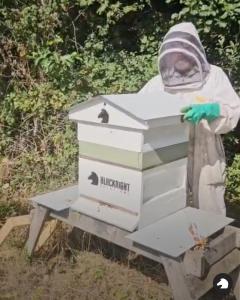
The main box, known as the brood box, is essentially the nursery and living quarters for the honeybee colony. Inside you can find the queen, eggs, larvae and developing pupae, along with pollen, bee bread and honey.
Yes — bees eat honey themselves too!
The honey and pollen stored within the brood area help provide food for the colony and the developing young bees. These boxes are generally deeper because they need to accommodate the brood and the busy life of the colony.
Then, as the colony grows and begins collecting more nectar than it needs for its immediate survival, beekeepers can add the smaller, shallower boxes on top, known as supers.This is where the surplus honey is stored. And this was an important lesson for us: the honey that is harvested is the surplus honey stored in the supers. The bees need their own food stores to survive, particularly during winter.
Even the wood used to make the hive has a purpose. The type and quality of timber, along with the direction of the wood grain, can help with strength, durability and managing moisture. The spacing between the frames is carefully considered too, giving the bees enough room to move around and pass each other while keeping the hive efficiently organised.
It made us realise that beekeeping isn’t simply a case of putting a box somewhere and waiting for honey. There is knowledge behind every part of it — from the materials used to build the hive, to the size and position of each box, to understanding what the bees need at different times of the year.
And then there are the bees themselves. The female worker bees do an extraordinary amount of the work within the colony. They clean the hive, feed the young, care for the queen, produce wax, build comb, guard the entrance and collect nectar and pollen.
Perhaps one of the more surprising facts of the day, the male bees, or drones, have a very different role. Their main purpose is reproduction and, when autumn arrives and food becomes scarce, the worker bees can force the drones out of the hive to conserve precious food supplies. Nature can be pretty ruthless!
We also learned about propolis, a sticky resin-like substance that bees collect from plants. They use it throughout the hive to seal gaps, protect surfaces and help maintain their home. To us, it might look like a dark, sticky substance that doesn’t seem particularly special, but for the bees it is another essential part of maintaining and protecting their environment.
And then there is the cleanliness of the hive. Bees have their own natural ways of protecting and disinfecting their living space, helping to keep the colony healthy. The more we heard about it, the more incredible it seemed that thousands of bees can live together in such a carefully maintained environment.
The Incredible Architecture of the Hive
When temperatures drop, the bees form what is known as a winter cluster, huddling together in a ball around the queen.
They don’t simply sit there and wait for spring. The bees generate warmth by vibrating their wing and flight muscles, creating heat within the cluster. The bees on the chilly outer edge can move towards the warmer centre, while others take their turn on the outside. It is an incredible natural survival system.
The colony survives through winter on the honey and food stores it gathered during spring and summer. And this brought us back to that really important point — the honey beekeepers take is the surplus honey, the extra stored in the supers. The bees still need their own food stores to get them through the colder months. The whole system is incredibly well thought out.
We also discovered something that surprised us about honey itself.
Did you know that honey do not spoil?
Honey has a naturally low moisture content, making it difficult for many bacteria and microorganisms to grow. It is also naturally acidic, and enzymes added by the bees contribute to its antimicrobial properties.
This is why properly stored honey can remain edible for an extraordinarily long time. Honey has even been found in ancient archaeological sites that is thousands of years old. And if your honey crystallises, don’t throw it away! Crystallisation doesn’t mean that honey has gone bad. If you prefer your honey runny, gently warming crystallised honey can return it to a liquid consistency.
So that jar of honey sitting in the cupboard that has gone a little grainy? It may simply have crystallised — and it can still be perfectly good.
The People Behind the Bees
Perhaps what made the day even more enjoyable was meeting some of the volunteers who dedicate their time to the Carlow Beekeepers Association. There was such a genuine passion for bees, nature and the environment among everyone we met.
What is particularly impressive is that many of these volunteers are doing all of this in their spare time, alongside full-time jobs, families and their own busy lives. Many also have one or more hives of their own, while still giving their time and knowledge to support the association’s hives.
Shane and the wider team were equally welcoming, and it was lovely to spend time with people who clearly care so much about bees and the environment.
The day ended with a lovely BBQ, plenty of chats and lots of laughs. It was a fitting end to a day that had been all about community, learning and a shared love of bees.
We were also very proud to be able to support the Carlow Beekeepers Association again this year, including helping with the upgrading of some of their facilities.
Bees are incredibly important to our environment, and organisations like the Carlow Beekeepers Association play such an important role in caring for them, educating others and helping people understand just how remarkable these little creatures are.
Before this experience, we think we probably looked at bees in a much simpler way.
They make honey. They pollinate flowers. That’s about it. Now we know there is an entire world going on inside that hive. There is communication, organisation, cleaning, feeding, construction, protection, temperature control, food storage, reproduction and an incredibly complex social structure — all happening through the collective work of thousands of individual bees.
And somehow, they just get on with it.
Want to Learn More?
If you’ve ever been curious about bees or thought about getting involved in beekeeping, the Carlow Beekeepers Association runs a beekeeping course each February, which is a fantastic opportunity to learn more and discover what is involved.
Keep an eye on their social media channels for information about their next course and how you can get involved.
You might start out simply wanting to learn about honey, but before long you’ll probably find yourself fascinated by the entire world inside the hive just like we were in a short few hours.
Behind that jar are thousands of bees, countless hours of work, a beekeeper caring for the colony and a whole community of people who give their time to protect and understand these remarkable creatures.
Support local beekeepers. Support our bees. Support our environment.
And the next time you see a bee buzzing around your garden, maybe you’ll look at it a little differently.
Because honey is just one small part of what makes a bee so incredible.
About the Author: Alicia Stumke